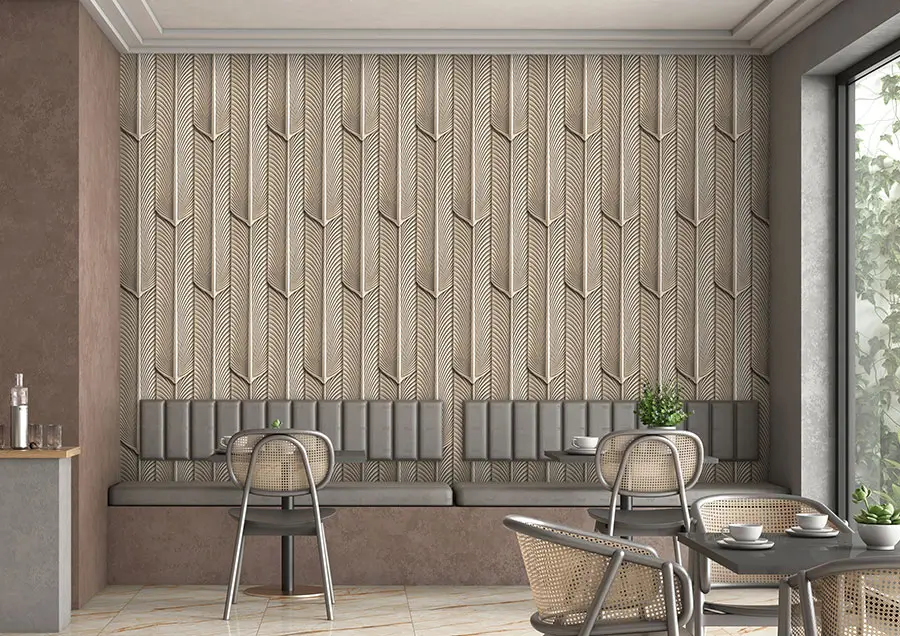


An attractive 3D wall panel can catch a customer's attention in seconds. But for UK retailers and distributors, visual appeal alone is not enough to make a collection worth stocking.
Buyers also need to consider whether the designs suit different interiors, how easily customers can understand the installation process, and whether popular models can be reordered consistently.
A commercially attractive 3D PU wall panel collection should balance distinctive designs with practical dimensions, clear product information and dependable supply. These factors can help retailers present products more confidently and make informed stocking decisions.
A 3D PU wall panel collection becomes commercially attractive to UK retailers when it offers visually distinctive designs, practical installation options, clear product specifications and reliable repeat-order availability. Retailers should also assess sample quality, customer applications, packaging, relevant product compliance information and the supplier's ability to support wholesale quantities.
What Makes a 3D Wall Panel Collection Worth Stocking?
UK customers are looking beyond plain painted walls. Textured surfaces, geometric patterns and statement walls are creating new opportunities for decorative retailers. But a commercially attractive collection needs the right balance of design, application and practicality.
Here’s what retailers should look for.
1. Designs That Customers Can Visualise in Their Spaces
Some decorative wall panels communicate their design appeal more clearly when customers see them installed rather than viewing a single product image. For UK retailers, showroom displays and realistic room visuals can help customers understand how a 3D texture may look across a complete wall.
Ocean Wave 3D PU wall panel is one good example of how its flowing design can make the wall more stylish. Diamond Cut offers a more geometric design while Flute Peak is better suited for those who prefer clean designs. Displaying these designs in different room settings can help retailers demonstrate how panel patterns complement furniture, lighting and interior colour schemes. Retailers should evaluate how well a design works when several panels are installed together, including pattern continuity, edge alignment and visible repetition.
These designs provide a tool that helps retailers create a visual impact. A visitor walking into a showroom should be able to see themselves using this product. The simpler it is to visualize the finished project, the easier it will be to talk about purchasing it.
2. Texture Gives Retailers Something New to Sell
Paint can change a wall’s colour. Wallpaper can introduce a pattern. But three-dimensional panels add something different: actual depth. And that depth changes how a wall interacts with light.
Take Block Wave or Wave Flow 3D PU Wall Panel. Their raised patterns can create changing shadows as daylight moves across the room. For retailers, this creates opportunities to present different visual effects through sample walls, lighting demonstrations and project photography. A single panel may not fully communicate the effect of a repeated three-dimensional pattern, particularly when the design relies on shadows and directional lighting.
Under carefully placed artificial lighting, the effect becomes more noticeable. This gives retailers a stronger product story than simply offering another decorative colour. Instead of selling a wall covering, they’re offering customers a way to change the character of an entire space. That’s a much more interesting conversation.
3. Size Matters More Than Buyers Think
A customer loves a design. Then comes the practical question.
“How many panels will I need?”
Different panel dimensions affect coverage calculations, layout planning, cutting requirements and the number of pieces needed for a project. Retailers should provide customers with accurate dimensions and installation guidance for each design rather than applying one calculation to the entire collection.
Before placing wholesale orders, request product-specific dimensions, coverage information and packing quantities from the manufacturer.
4. Easy Renovation Is a Strong Selling Point
Not every customer wants a major renovation. A restaurant may need a fresh interior without closing for weeks. A homeowner might want to upgrade a feature wall without extensive building work.
Lightweight decorative PU panels may be suitable for selected renovation projects where customers want to introduce texture without using heavier traditional decorative materials. However, installation suitability depends on the substrate, fixing method, panel dimensions and the conditions of the space.
Retailers should provide clear installation instructions and explain any limitations before recommending products for residential or commercial applications.
For UK renovation projects, customers may also need to consider fire-safety requirements, moisture exposure and compatibility with existing wall surfaces. These should be evaluated using product-specific technical documentation.
5. Good Stock Should Be Easy to Reorder
Imagine your best-selling panel suddenly becoming unavailable. Customers are asking for it. Installers need additional pieces. But your supplier cannot confirm the next shipment.
That’s not a problem any retailer wants. Before stocking a collection, check production continuity, colour consistency, packaging and lead times. UK retailers should also request technical information, including relevant fire-performance evidence for intended applications. After all, a product that looks fantastic but creates problems after the sale isn’t a commercial success.
Retailers should ask whether selected designs are part of the manufacturer's regular collection, what minimum quantities apply to repeat orders and how colour or finish consistency is managed between production batches.
They should also review packaging dimensions, expected shipping lead times and the process for reporting damaged or defective panels. These details affect inventory planning and customer service after the initial purchase.
How Should UK Retailers Select a 3D PU Wall Panel Collection?
| Selection factor | What retailers should evaluate | Commercial relevance |
| Design variety | Linear, geometric, wave and decorative textures | Serves different design preferences |
| Visual presentation | Full-wall displays and room photography | Helps customers visualise applications |
| Panel dimensions | Coverage, cutting and layout requirements | Supports accurate quotations |
| Installation | Substrate, fixing method and instructions | Reduces avoidable installation enquiries |
| Product documentation | Materials, intended use and relevant test evidence | Supports informed product selection |
| Stock planning | MOQ, packing quantities and lead times | Helps manage inventory commitments |
| Repeat supply | Design availability and finish consistency | Supports future customer orders |
| Supplier support | Samples, specifications and export coordination | Simplifies purchasing decisions |
A commercially attractive collection does not necessarily require the largest number of designs. For UK retailers, a focused range with clear applications, reliable product information and manageable ordering requirements may be more practical than stocking every available texture.
What Should UK Retailers Verify Before Listing 3D PU Wall Panels?
Before introducing imported 3D PU wall panels into their product range, UK retailers should confirm the products' intended applications, installation requirements and relevant technical documentation.
For residential and commercial interiors, the suitability of a decorative wall panel may depend on its fire performance, location of use and applicable building requirements. Retailers should avoid describing panels as fireproof, suitable for all commercial interiors or approved for every application without appropriate supporting evidence.
Product listings should also communicate accurate dimensions, material descriptions, installation limitations and care instructions. Clear information can help customers and installers make more informed decisions.
Why Export with Artisun Industries?
Artisun Industries offers a dedicated 3D PU Wall Panel collection, supported by in-house manufacturing and export-focused supply. The collection gives retailers different design directions to explore while discussing stock requirements directly with the manufacturer. UK retailers and distributors can explore:
- Ocean Wave, Wave Flow and Ribbon Wave
- Flute Peak, V-Groove and Rectangle Grid
- Diamond Cut, Egyptian Pyramid and Hexa Curve
- Oval Oasis, Bamboo Craft and other decorative textures
- Multiple panel sizes
- Sample kits for product evaluation
- Bulk-order and export support
Stock Designs Customers Want to Take Home
A commercially successful wall panel collection shouldn’t simply look impressive on a catalogue page. It should attract attention, fit different interiors and give retailers confidence when customers return for more. Explore the Artisun Industries 3D PU Wall Panel collection and connect with the export team for samples, product specifications and UK wholesale enquiries.
Most Popular Questions
What makes a 3D PU wall panel collection attractive to UK retailers?
A commercially attractive collection combines distinctive designs, practical dimensions, clear installation information and reliable supply. Retailers should also consider sample quality, packaging, relevant product documentation and repeat-order availability.
Which 3D PU wall panel designs should retailers consider stocking?
Retailers can explore wave-inspired, linear, geometric and decorative textures. The right assortment depends on customer preferences, showroom positioning, intended applications and actual sales demand.
How do retailers calculate the number of 3D PU wall panels needed?
Retailers can begin by dividing the wall area by the nominal coverage area of a panel. They should then account for the installation layout, cutting, pattern alignment and waste. Product-specific usable coverage should be confirmed.
Are 3D PU wall panels suitable for commercial interiors in the UK?
Suitability depends on the specific product, intended location, fire-performance evidence and applicable building requirements. Retailers should verify technical documentation before recommending panels for commercial projects.
What should UK retailers check before importing 3D PU wall panels from India?
Retailers should evaluate samples, product dimensions, material specifications, compliance information, minimum order quantities, packaging, landed costs and supplier lead times.
Does Artisun Industries supply 3D PU wall panels for UK wholesale buyers?
Artisun Industries manufactures decorative PU wall panels in India and accepts enquiries from UK importers, retailers and distributors regarding available collections, samples and bulk-order requirements.

Leading PU Wall Panel Manufacturer
As a proud representative of Artisun Industries, a leading PU Wall Panel manufacturer, I bring our expertise in crafting high-quality, durable PU Wall Panel tailored to meet diverse architectural needs. Join us in exploring innovative solutions that transform spaces beautifully!