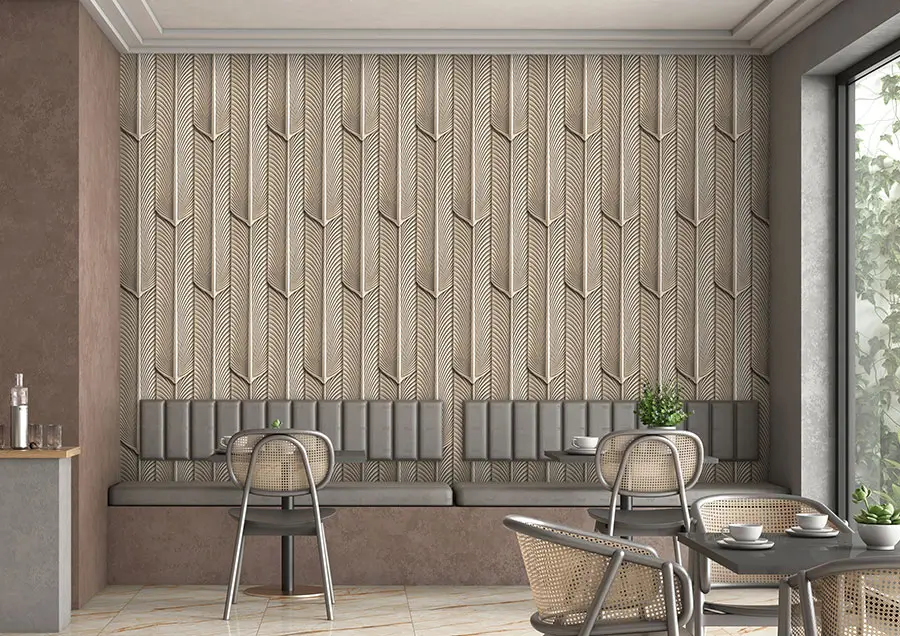

For UK importers and distributors exploring decorative wall materials, sourcing PU wall panels from India can provide access to stone-inspired, brick-effect and contemporary 3D designs.
However, selecting an attractive collection is only the beginning. Before placing a first bulk order, buyers need to understand product specifications, sample quality, packaging, import costs, regulatory requirements and repeat-order planning.
A panel that looks impressive in a catalogue may not meet the expectations of a UK retailer or commercial project. The right sourcing process helps buyers evaluate both the product and the manufacturer's ability to support future orders.
What Should UK Buyers Check Before Importing PU Wall Panels?
A successful first order begins long before the shipment leaves India. From product selection to customs clearance, a few early decisions can save considerable trouble later. Here’s what deserves your attention.
1. Don’t Fall for the Catalogue Alone
Stone textures, exposed brick designs and modern 3D patterns can look impressive on a laptop screen. But will they look equally convincing across an entire restaurant wall?
Before committing to bulk quantities, request physical samples. Check the texture, weight, dimensions, finish and edge quality. Place multiple panels together to see whether the patterns repeat too obviously. For UK retailers, this is particularly important. Customers buying decorative panels want to know how the finished wall will look, not just how one sample appears.
A paid sample kit is a small investment compared with receiving hundreds of panels that don’t meet expectations.
2. Check the Specifications Before the Price
Two suppliers may offer similar-looking PU panels at very different prices. Does that automatically make one a better deal?
Not necessarily.
Panel thickness, dimensions, material formulation and finishing quality can affect product performance and installation. Ask for technical specifications covering weight, size tolerances, intended use and recommended installation methods.
If you’re supplying commercial projects in London, Manchester or Birmingham, request supporting fire-performance documentation too. UK construction requirements depend on the product’s intended application and location. CE or UKCA marking may apply where the product falls within the relevant regulatory framework.
Don’t assume every decorative panel is approved for every building.
3. The Cheapest Quotation Isn’t the Final Cost
A manufacturer’s quotation may look attractive until freight, customs charges and local delivery are added.
That’s why UK buyers should calculate the landed cost, not just the factory price. Confirm whether your quotation is EXW, FOB, CIF or another agreed Incoterm.
These terms determine which party handles particular transport costs and risks. Your calculation should account for freight, insurance, customs clearance, applicable duty, import VAT and delivery to your warehouse.
The UK–India trade agreement entered into force in July 2026. Depending on the product’s tariff classification and origin eligibility, preferential duty treatment may be available. Check the applicable rate before pricing your stock.
4. Packaging Can Make or Break the Order
Although PU wall panels are lightweight, they still require protection. Just think about a shipment of lovely rock finish panels arriving with corners damaged and finishes scratched. Instead of receiving your first order, you now have a replacement scenario on your hands.
Inquire about how the manufacturer packages goods for international shipping, confirm numbers of cartons, protective materials, pallets distribution and loading methods. You can even ask for packaging pictures prior to shipping. For distributors selling to installers and retailers, products must be ready for resale. There is no point in having a beautiful panel that is unusable.
5. Think About the Second Order Now
The initial order is successful and that’s wonderful. But the client makes another order requesting for 300 units of similar design. Can your producer deliver the same quality? What would be the lead time in manufacturing the panels? Would the colours be uniform?
These are important questions to ask when your customer is already seeking your products. Before you order PU Wall Panels from Indian suppliers, it is recommended to find out about minimum order quantities, possibility of making repeat orders and about custom-made products. A manufacturer who is transparent in terms of production and timing will help your distribution business become more profitable.
Why Export with Artisun Industries?
Artisun Industries is an Indian manufacturer and exporter of decorative PU wall panels, offering stone-inspired, brick-effect, rock and 3D designs for architectural and interior applications.
For UK importers and distributors, working directly with a manufacturer provides an opportunity to discuss product selection, sample evaluation, technical specifications and bulk-order requirements before committing to a shipment.
- 45+ decorative panel designs
- In-house manufacturing and quality checks
- Paid sample kits for evaluation
- Custom development for qualifying orders
- Export-ready protective packaging
- Support with export documentation
- Bulk-order and distribution enquiries
Buyers can discuss specifications, product selections and shipping requirements directly with the manufacturing team.
Make Your First Import a Smarter One
Sourcing decorative panels should not be based on trusts of beautiful photos and low prices. Request samples. Get to know the parameters. Figure out your landed cost. Find a supplier ready to accept repeated orders. Check the Artisun Industries catalog and reach out to the exporting group for samples and prices.
Most Popular Questions
Can UK businesses import PU wall panels directly from India?
Yes. UK businesses can source PU wall panels from Indian manufacturers, subject to applicable customs procedures, product regulations and import requirements.
What should buyers check before ordering PU wall panels in bulk?
Buyers should verify physical samples, product specifications, intended applications, relevant compliance documentation, minimum order quantities, packaging and shipping terms.
Do PU wall panels imported into the UK require CE or UKCA marking?
Marking requirements depend on the product's regulatory classification, intended use and the market where it will be supplied. Importers should establish the applicable requirements for the specific product rather than assuming that all decorative PU panels follow the same rules.
How can importers calculate the landed cost of PU wall panels?
Landed-cost calculations should consider the product price, freight, insurance, customs duty, import VAT, clearance charges and delivery expenses, based on the agreed Incoterm.
Can UK importers request custom PU wall panel designs?
Some manufacturers offer custom development subject to technical feasibility, minimum order quantities and commercial terms. Artisun Industries can be contacted to discuss qualifying custom requirements.
Does Artisun Industries supply PU wall panels for bulk orders?
Artisun Industries manufactures decorative PU wall panels and accepts enquiries from importers, distributors and other B2B buyers regarding available collections, samples and bulk-order requirements.

Leading PU Wall Panel Manufacturer
As a proud representative of Artisun Industries, a leading PU Wall Panel manufacturer, I bring our expertise in crafting high-quality, durable PU Wall Panel tailored to meet diverse architectural needs. Join us in exploring innovative solutions that transform spaces beautifully!