
"Sustainable renovations" have emerged as an increasingly significant component of contemporary interior designs in the Netherlands. Instead of completely rebuilding interiors, people are now seeking ways of updating interiors without producing too much waste and without having to conduct extensive work. As a result of this approach, the importance of materials that can help create a change in visual appearance without requiring extensive building has become increasingly important.
PU decorative wall panels are a product that falls into the scope of sustainable renovations since they can offer versatile finishes that allow one to apply stone, brick, wood, or textured appearances on walls with minimal effort.
Why are decorative PU wall panels used in sustainable renovations?
Decorative PU wall panels are increasingly used in sustainable interior renovation projects across the Netherlands because they allow architects and designers to refresh existing spaces with lightweight stone, brick, wood, and textured finishes while reducing demolition and minimizing disruption.
Can a Renovation Look New Without Starting From Scratch?
Sustainability in renovations is not just selecting materials that are environmentally friendly. Sustainability in renovations also involves putting into proper use what we already have. This could include things like preserving existing structures and minimizing demolition work where possible. Installation methods can also be sustainable.
1. Renovate Existing Spaces With Less Structural Work
One of the greatest obstacles in renovations is dealing with what is already present in the building. The presence of walls, designs, and existing structures makes the use of heavy materials less likely.
Decorative PU wall panels are relatively light when compared to many of the available traditional wall coverings. Therefore, they are easy to manipulate and ideal for renovations that do not require extra weight.
PU wall panels can be installed in feature walls, reception rooms, bedrooms, corridors, lounges, and any other preferred location within an interior.
2. How Decorative Wall Panels Help Reduce Demolition
Demolition leads to waste. The removal of old finishes, the transportation of waste, and the preparation of surfaces for the application of new materials may make renovation not only environmentally but also practically costly.
There is a way to limit the demolition of building elements by limiting it to the parts of walls, which have the most visual effect and by decorating them with panels.
Such an approach will help to keep the process of renovation limited, especially in inhabited apartments, offices, hotels, and other commercial buildings.
3. Lightweight Materials for Urban Renovation Projects
Materials transportation is another factor in renovation. The moving, storage and handling of heavy materials like stone, masonry, and other construction materials take extra effort.
The lightweight quality of PU panels makes material handling easy. Easy handling will enable contractors to transport their materials through existing buildings, something that is very important in dense urban areas.
In situations where materials have to be transported through small openings, upper levels of buildings, or occupied buildings, easy material handling makes renovation work easier.
4. Reduce Renovation Disruption with Faster Wall Installation
Another aspect of sustainable renovation is taking into account the amount of disruption that renovation causes. Long renovation periods may have an impact on the lives of the residents, employees, customers, and local businesses.
Installation of decorative PU panels is intended to be rather simple and depends on the substrate and method of installation. This feature allows reducing the time of decorative wall finishing compared with some conventional finishing systems.
Short installation periods can be of great use for hotels, restaurants, and retail stores.
5. More Design Freedom with Decorative Textures
Sustainable design need not restrict creativity either. Choosing the right material may provide many options visually without having a new system of construction for each idea.
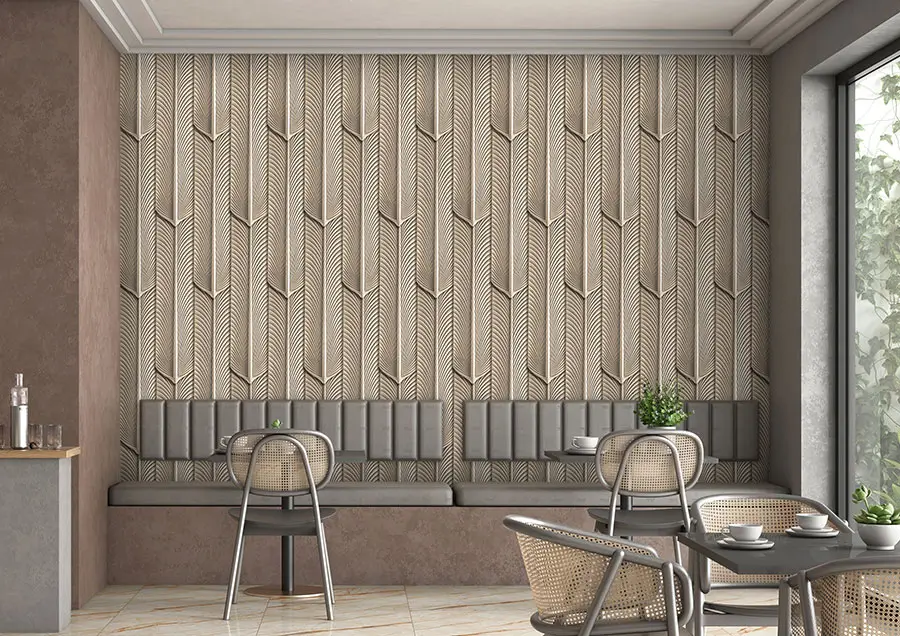
PU wall panels with decorative finishes come in various textures and finishes. Designers can use the material to form walls that look like stones in one section and bricks in others. Soft contemporary textures are also possible with these panels.
This diversity will make it easier for designers to choose materials even if they want their interior to reflect their unique individuality through distinct textures in each section. If designers work on renovations in different sections, they can choose panels by companies such as Artisun.
6. Extend the Visual Life of Existing Interiors
A sustainable renovation would be one that makes the space functional and attractive for a more extended period. Renovating just to keep up with changing looks will generate further material demands and higher costs.
The use of textured wall panels can make an interior more distinctive without necessitating a full-scale interior design overhaul. Selecting a feature wall can transform the mood of a space without having to change its furnishings, floor coverings, lighting, and other fixtures.
This would be very helpful in the hospitality and commercial sectors where interiors have to stay visually relevant.
Decorative PU Wall Panels vs Traditional Wall Finishes
| Feature | Decorative PU Wall Panels | Traditional Stone / Brick |
| Weight | Lightweight | Heavy |
| Demolition Required | Often less | Higher |
| Renovation Friendly | Excellent | Moderate |
| Design Variety | Stone, brick, wood, concrete | Material specific |
| Installation | Faster | More labour intensive |
| Interior Upgrades | Ideal | More complex |
A Smarter Way to Refresh Existing Interiors
Sustainable interior renovation in the Netherlands is increasingly about doing more with existing spaces. Rather than treating renovation as a complete replacement process, architects and designers can focus on materials and methods that reduce unnecessary work while still delivering strong design results.
For architects, designers, and developers looking for versatile solutions for sustainable interior upgrades, Artisun Industries provides decorative PU wall panels designed to combine visual appeal with practical renovation needs. With thoughtful material selection and focused application, existing interiors can gain a fresh identity without unnecessary structural changes.
Most Popular Questions
Are decorative PU wall panels suitable for sustainable renovations?
Yes. They are widely used in renovation projects where designers want to refresh existing interiors with lightweight decorative wall finishes while limiting unnecessary structural work.
Where can decorative PU wall panels be installed?
They are suitable for feature walls, living rooms, hotel lobbies, offices, restaurants, reception areas, retail interiors, corridors, and residential renovation projects.
Do decorative PU wall panels look like natural materials?
Modern decorative PU wall panels replicate the appearance of stone, brick, wood, concrete, and textured surfaces while remaining considerably lighter than traditional materials.
Why are they popular in Dutch interior renovations?
They support renovation-focused design by combining aesthetic flexibility, lightweight handling, and practical installation for existing buildings across the Netherlands.

Leading PU Wall Panel Manufacturer
As a proud representative of Artisun Industries, a leading PU Wall Panel manufacturer, I bring our expertise in crafting high-quality, durable PU Wall Panel tailored to meet diverse architectural needs. Join us in exploring innovative solutions that transform spaces beautifully!