
Commercial interior design in the Netherlands involves more than creating attractive spaces. Offices, hotels, restaurants and retail environments also need to communicate brand identity, support different activities and maintain a coordinated visual character.
3D PU Wall Panels offer one way to introduce architectural texture into these spaces. Beyond traditional feature walls, raised and sculptural panel designs can help distinguish functional zones, connect different areas and create visual continuity without relying on additional decorative objects.
How can 3D PU Wall Panels be used beyond feature walls?
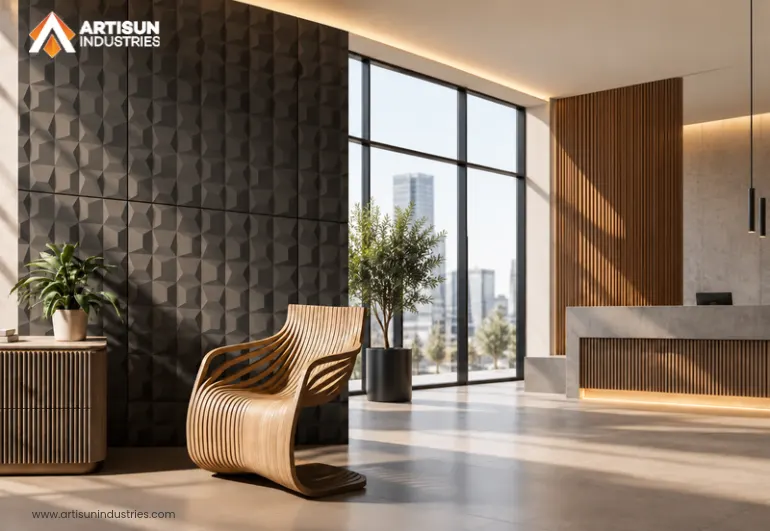
In commercial interiors, 3D PU Wall Panels can help define reception areas, distinguish meeting spaces, highlight retail displays and create coordinated textures across hospitality environments. Their raised patterns introduce visual depth through light and shadow, allowing designers to organise spaces without necessarily adding physical partitions.
What Happens When Texture Becomes More Than a Feature Wall?
Normally, the feature wall tends to emphasize one area within a room. However, designing a commercial interior is not just about creating a visual focal point. Each of the various sections, including reception desks, meeting rooms, and retail displays, plays its part in creating the experience of the interior.
The three-dimensional wall panels offer an additional opportunity for using textures in the interior. The correct selection of such panels could unite the whole interior, make it visually appealing, and match the materials used in the building.
1. How Can 3D PU Wall Panels Strengthen Reception Design?
The reception area is usually the first element seen in an office, hotel or any other business premises. Simple wall finishes give a sense of professionalism; however, they fail to project an identity of their own.
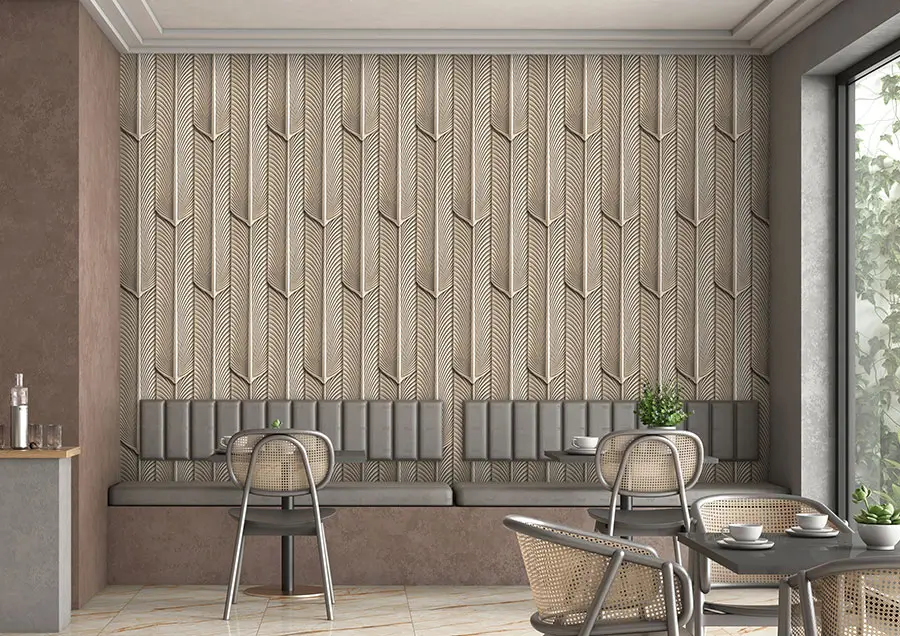
Textured panels will help create a background for reception desks and waiting areas. Geometric patterns can be used for modern offices while soft designs can complement hospitality businesses.
The wall finish should match the identity of the company and not clash with signs, lighting and furniture.
2. How Can 3D PU Wall Panels Define Office Spaces?
Most modern offices incorporate both collaborative areas, meeting rooms, and work spaces. Using the same wall material throughout all spaces will not only look boring but will unify everything.
A 3D PU wall panel allows for slight diversity while maintaining unity within the interior. The panels applied in meeting rooms will allow distinguishing between various spaces without the need for physical separators.
The outcome is a more thought-through interior that remains clean and professional-looking.
3. How Do 3D PU Wall Panels Support Retail Display Design?
Product presentation and customer flow through the retail space define retail design. In addition to merely forming a background, walls now can assist in setting the atmosphere and drawing attention to certain displays.
Texture panels can be placed behind the product shelves, behind the checkouts or branded displays in order to add contrast and accentuate certain zones. The patterns and finishes should harmonize with the displayed goods and not compete with them.
For the retailer, the idea is to apply textures selectively and not cover everything with an aggressive design solution.
4. Where Can 3D PU Wall Panels Be Used in Hospitality Interiors?
The aesthetics of the interior and its functionality should always be balanced. Hospitality venues, such as hotels, restaurants and cafes, usually apply design features that are able to define their specific ambiance.
3D panels can provide an additional layer to the interior design of lounges, dining rooms, corridors and reception areas. Gentle pattern can help create a peaceful ambience, while more striking textures will bring more attention to certain zones.
Potential providers, such as Artisun, can be reviewed while choosing among decorative panels for hospitality and other commercial projects. Compatibility with the designated place and ease of maintenance should be considered.
5. Can 3D PU Wall Panels Create Visual Zoning Without Partitions?
Open layout commercial spaces may help improve the openness of the interior, but they would not help define the space visually. The idea of putting up partitions on a permanent basis is not one that seems attractive.
A wall texture can help demarcate between the waiting zone and the traffic zone or give an identity to a collaboration zone. This can be achieved through selective use of varied textures without installing any partitions.
This can be done successfully if the design of panels is consistent with the architectural design of the building.
How Can 3D PU Wall Panels Support Different Commercial Spaces?
| Commercial space | Application | Design purpose |
| Corporate offices | Reception and meeting areas | Brand identity and visual zoning |
| Retail stores | Display walls and checkout zones | Direct customer attention |
| Hotels | Reception, lounges and corridors | Coordinated hospitality design |
| Restaurants | Dining backdrops and feature areas | Atmosphere and visual character |
| Commercial showrooms | Product displays and presentation zones | Define visual focus |
| Shared workspaces | Collaboration and waiting areas | Distinguish functional zones |
These are potential design applications. Product suitability should be confirmed according to the selected panel's technical specifications and the project's requirements.
Are 3D PU Wall Panels Becoming a Wider Design Tool?
Usage beyond feature walls is part of the change in commercial interior design; surface texture is being considered in relation to the space in which it is set up. Textures can be used to define an identity, provide definition, or act as lighting without ornamentation.
It all depends on the purpose, layout, and design direction of the particular project.
Why Choose Artisun Industries for 3D PU Wall Panels?
Artisun Industries offers decorative 3D PU Wall Panel collections for architects, interior designers, distributors and commercial project buyers exploring textured wall finishes.
Buyers can evaluate different patterns, dimensions and finishes, request samples and discuss bulk supply requirements for commercial projects in the Netherlands.
Commercial Design Is About the Whole Experience
Three-dimensional wall panels can serve for more than just creating a statement wall. Used in the right way, they can make commercial spaces unique, cohesive, and visually exciting.
For Dutch architects, interior designers, contractors, and developers looking for textured wall solutions, Artisun Industries provides 3D PU wall panel solutions for modern commercial interiors. By selecting the right pattern and finish for the space, designers can go beyond just a statement wall and use texture as an element of interior design.
Most Popular Questions
Can 3D PU Wall Panels be used beyond feature walls?
Yes. They can help define reception areas, retail displays, meeting spaces and coordinated interior zones.
Are 3D PU Wall Panels suitable for commercial interiors?
They can be considered for selected commercial applications when the product meets the project's technical requirements.
Can 3D wall panels help create visual zoning?
Yes. Different textures can distinguish functional areas without necessarily adding physical partitions.
Which 3D PU Wall Panel patterns suit commercial interiors?
Fluted, wave, geometric, grooved and sculptural patterns can support different commercial design concepts.
What should buyers check before ordering 3D PU Wall Panels?
Check dimensions, finish, installation requirements, maintenance guidance, technical documentation and bulk availability.

Leading PU Wall Panel Manufacturer
As a proud representative of Artisun Industries, a leading PU Wall Panel manufacturer, I bring our expertise in crafting high-quality, durable PU Wall Panel tailored to meet diverse architectural needs. Join us in exploring innovative solutions that transform spaces beautifully!