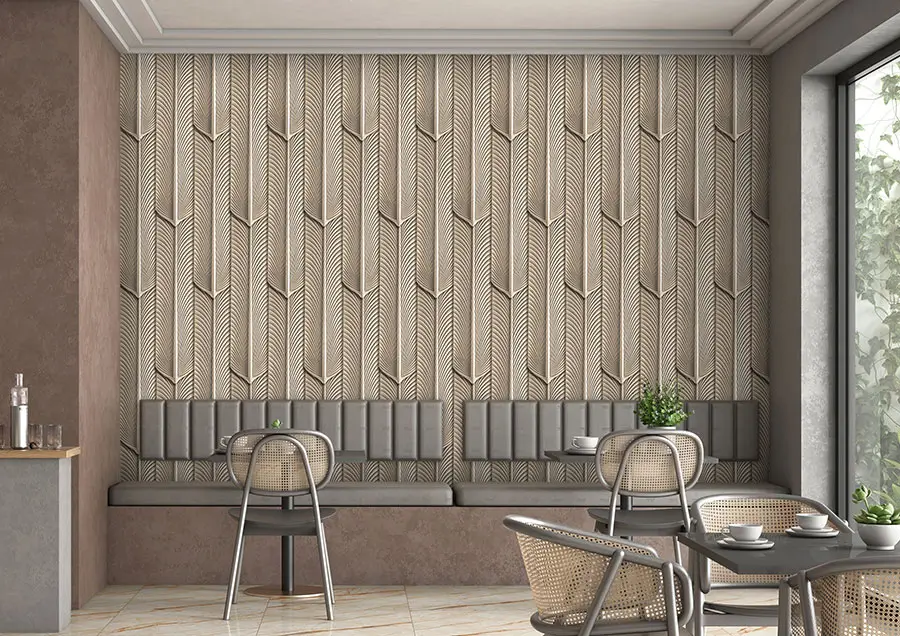

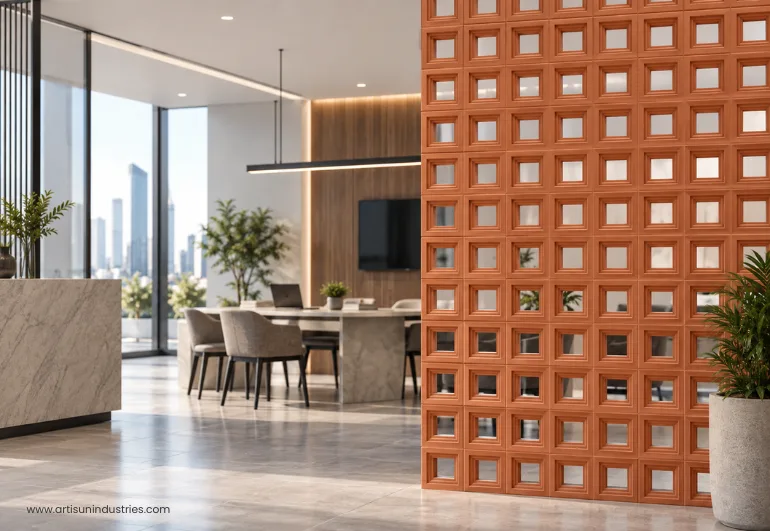
A commercial interior has one job before the customer even sits down, checks in or starts shopping:
Make them feel something.
That is becoming harder.
Another grey office. Another marble-look hotel lobby. Another café with the same timber slats. When competitors can recreate a look quickly, designers need surfaces that give a space its own identity.
That is why walls are getting more attention.
Across UK hospitality, retail and workplace design, texture, natural references, geometric forms and more character-led interiors are replacing large stretches of flat, anonymous surfaces. Recent UK hospitality design commentary has highlighted tactile materials, layered textures, individuality and memorable spaces as important directions.
For importers, distributors and project suppliers, this creates an opportunity for the right Decorative PU Wall Panel Supplier.
Which Wall Trends Are Actually Creating Commercial Opportunities?
The useful trends are not simply the ones that photograph well. They are the ones architects can specify, contractors can work with and distributors can turn into repeat business.
1. Flat Walls Are Giving Way to Real Depth
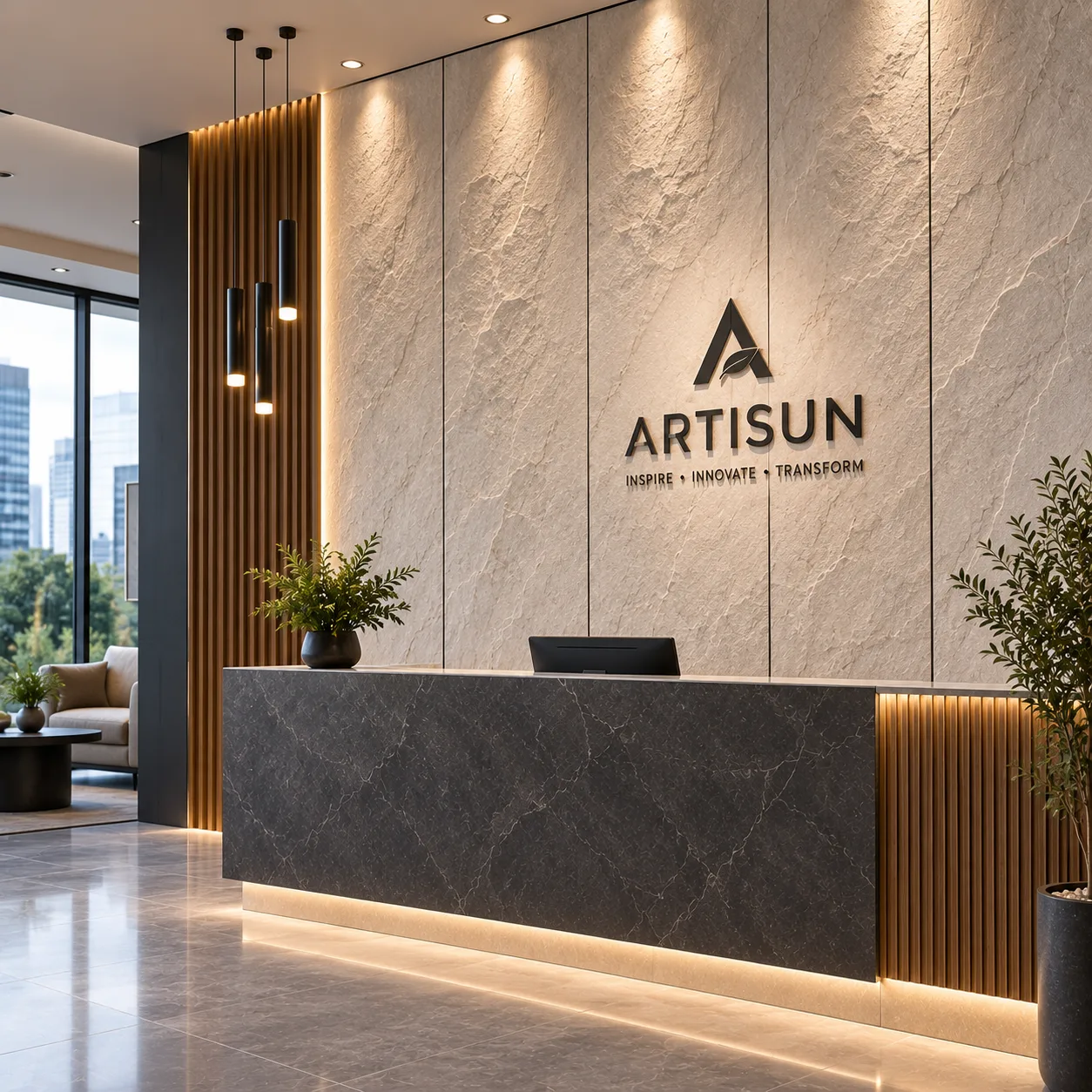
Texture is no longer being added only through wallpaper patterns or paint effects.
Designers increasingly want surfaces that physically project from the wall.
Fluting. Recesses. Waves. Repeated blocks. Geometric relief.
Why?
Because light changes across them throughout the day. A reception wall can look different under morning daylight and evening ambient lighting without adding another decorative material.
Current 3D PU ranges demonstrate this shift clearly, with forms such as Ocean Wave, Flute Peak, V-Groove, Diamond Cut, Egyptian Pyramid and Rectangle Grid. Many are available in 600×1200 mm formats with depths ranging from around 20 mm to 40 mm.
For a Decorative PU Wall Panel Supplier, three-dimensional design is becoming a category in its own right. For UK distributors, 3D PU wall panels can create a broader product range around feature walls, reception areas, hospitality interiors and retail environments without relying only on printed decorative finishes.
2. Natural Does Not Always Mean Using Natural Material
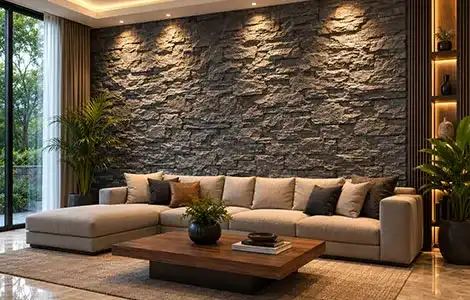
UK hospitality interiors continue to show strong interest in nature, craftsmanship and organic textures. Industry commentary has highlighted stone, handmade character and tactile natural references as ways to make commercial environments warmer and more memorable.
But contractors see another side of natural materials.
- Weight
- Handling
- Installation time
- Variation
That is why stone, rock and brick inspired PU surfaces are commercially interesting. They allow designers to bring the visual character of natural materials into restaurants, hotels and retail spaces through a lightweight decorative system.
The sales conversation becomes less about imitation and more about achieving the design language practically.
3. Geometry Is Becoming Less Corporate
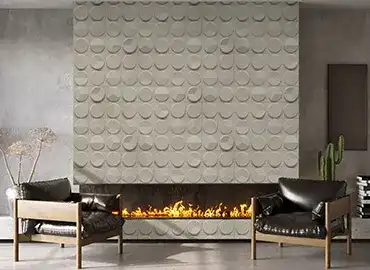
Geometric walls used to mean repetitive squares in office receptions.
That is changing.
Today, geometry can be playful, sculptural and almost artistic.
A pattern like Bread Crumb creates rounded repetition. Block Wave introduces movement. Oval Oasis uses large circular forms. Ribbon Wave creates a completely different rhythm.
This works particularly well for spaces where one wall needs to do more:
- Hotel reception backdrops
- Retail display zones
- Restaurant feature walls
- Office breakout areas
- Brand experience spaces
UK workplace design is also seeing renewed interest in contrasting textures and retro-influenced geometry, giving distributors another market beyond hospitality.
4. Neutral Colours Are Staying
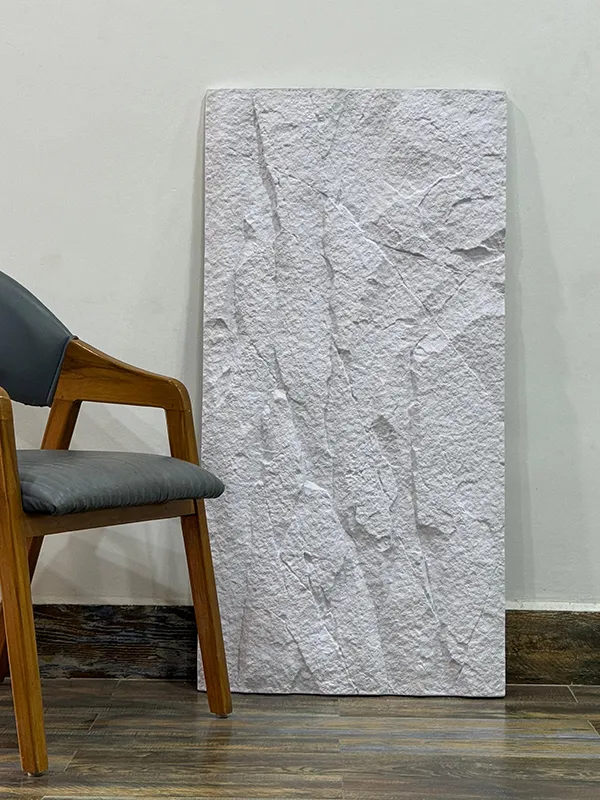
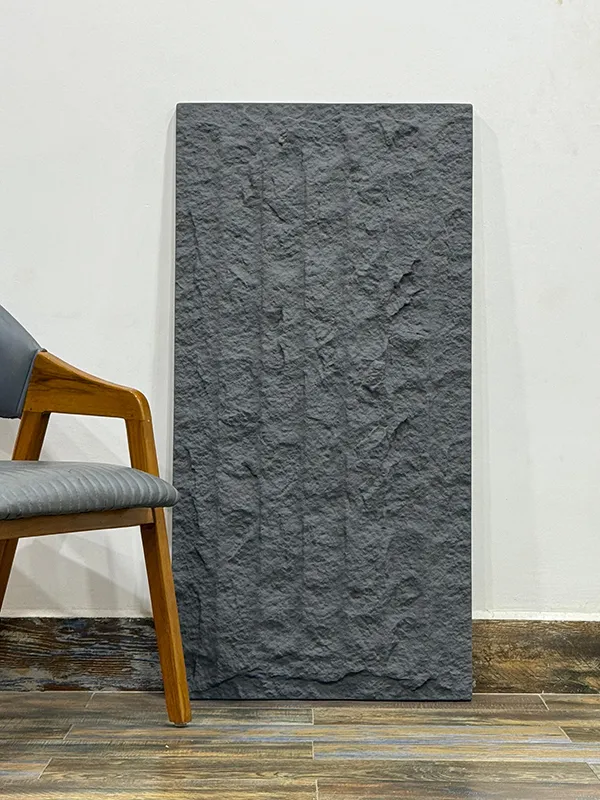
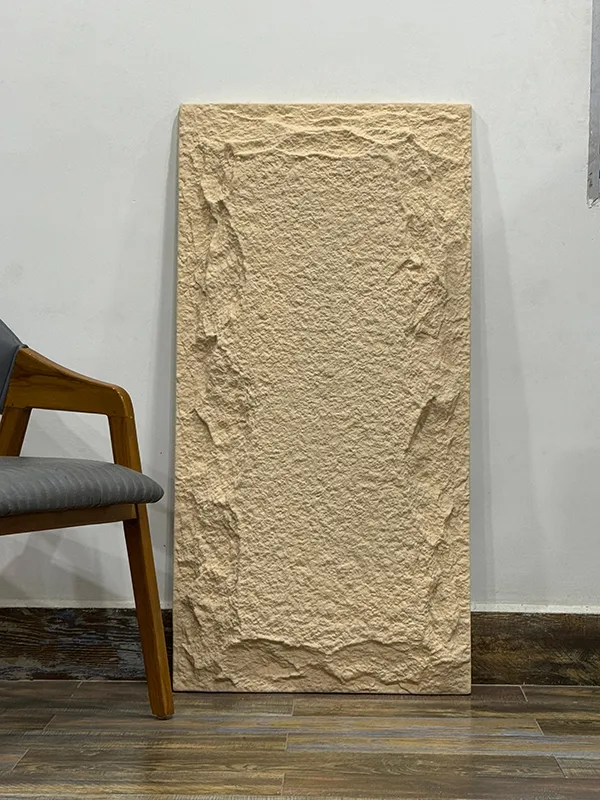
Beige, black, white and grey are not disappearing. The change is how they are being used.
Instead of relying on colour alone, designers are creating interest through shadow, relief and texture.
A beige three-dimensional surface can feel much richer than a plain beige wall. Black can become dramatic rather than flat. Light grey can change character depending on lighting.
The current 3D panel range repeatedly uses beige, white, black, light grey and dark grey across different patterns, giving project teams a consistent neutral palette with very different surface personalities.
For distributors, this is commercially useful.
You can introduce something fresh without asking conservative buyers to suddenly embrace difficult colours.
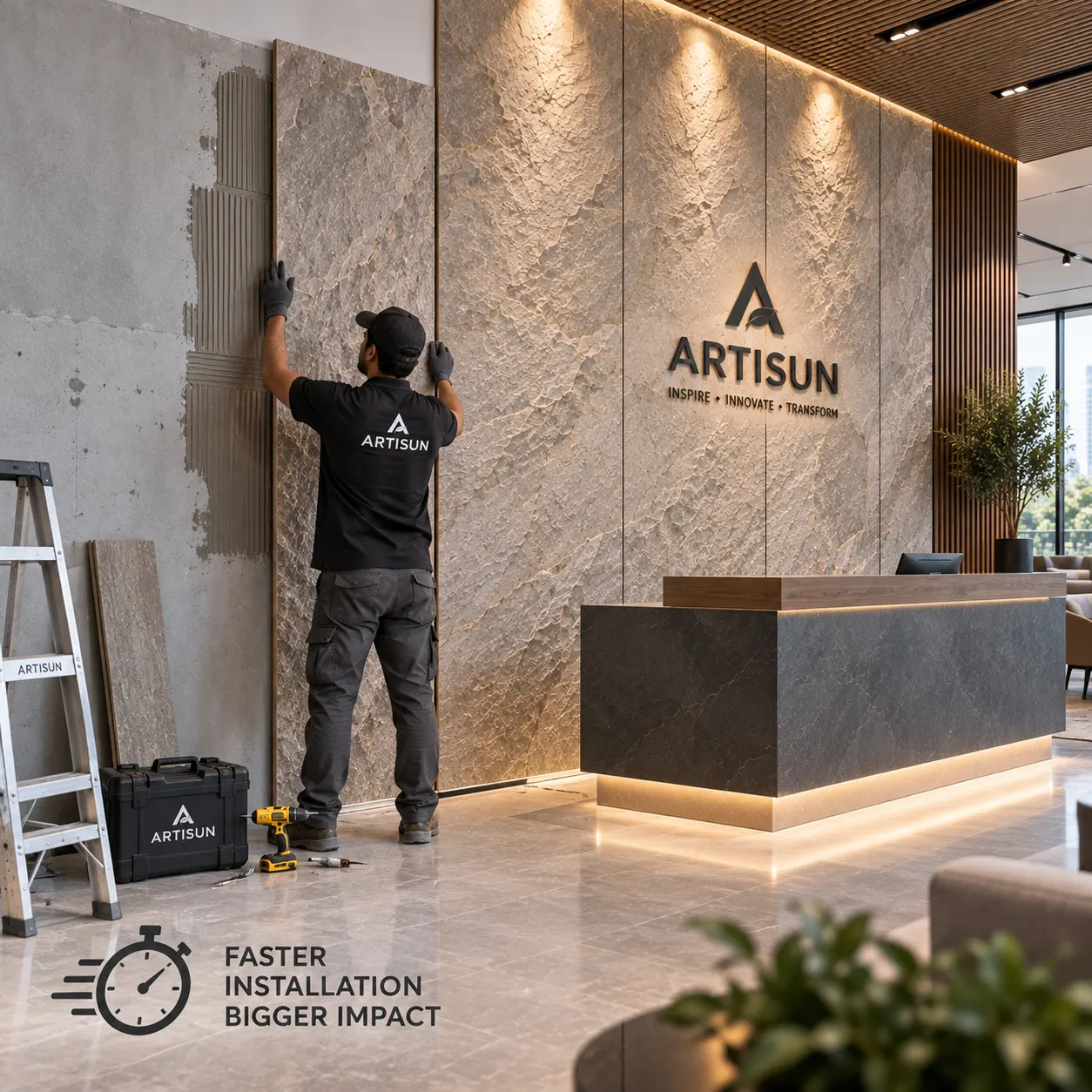
5. Commercial Clients Want Faster Visual Transformation
A retailer closing for refurbishment loses trading time.
A hotel room under renovation cannot be sold.
A restaurant does not want its reopening pushed back because one decorative wall became complicated.
This is why installation practicality is influencing material choice.
PU wall panels are positioned as lightweight and easy to handle, making them relevant to refurbishment projects where reducing unnecessary site complexity matters.
For a Decorative PU Wall Panel Supplier, the strongest pitch is therefore not only:
“Look at this texture.”
It is:
“Look at what you can achieve without turning the wall into the longest part of the programme.”
Where Are Decorative PU Wall Panels Being Used in UK Commercial Interiors?
| Commercial Space | Typical Application |
| Hotels | Reception walls, corridors, guestrooms, feature areas |
| Restaurants | Dining areas, feature walls, bar backdrops |
| Retail | Display zones, brand walls, customer areas |
| Offices | Reception areas, meeting rooms, breakout spaces |
| Cafés | Counter backdrops, seating areas, feature walls |
| Showrooms | Product display backgrounds and branded areas |
Why Choose Artisun Industries as a Decorative PU Wall Panel Supplier?
Artisun Industries manufactures decorative PU wall panels for project buyers, importers and distributors seeking distinctive interior surface solutions. Its range includes multiple three-dimensional textures and design styles, with sample kits, custom design-development support and export-oriented packaging for international requirements.
- Export-standard protective packaging
- Documentation for international orders
- Production scheduling for bulk requirements
- Sample kits before larger commitments
- Custom design-development support
- Direct manufacturing rather than third-party sourcing
Which PU Wall Panel Styles Match Current UK Interior Trends?
| UK Interior Trend | Suitable PU Panel Direction |
| Tactile interiors | Deep 3D textures |
| Natural references | Stone, rock and organic textures |
| Geometric interiors | Grid, block and repeated patterns |
| Retro influence | Curved and rhythmic forms |
| Neutral interiors | Beige, white, grey and black finishes |
| Feature walls | High-relief statement designs |
| Hospitality interiors | Textured reception and dining walls |
Put More Character on the Wall
UK commercial interiors are becoming more tactile, expressive and memorable.
Your product range should be moving in the same direction.
Explore the Artisun Industries catalogue to discover decorative PU wall panels, and connect with the export team to discuss samples, bulk pricing and UK distribution opportunities.
Most Popular Questions
What are decorative PU wall panels?
Decorative PU wall panels are lightweight interior wall panels made from polyurethane and designed to add texture, relief or decorative finishes to interior surfaces.
Why are PU wall panels used in commercial interiors?
They can provide textured and three-dimensional decorative effects while offering a lightweight alternative to some heavier decorative materials. Their suitability depends on the specific product and installation system.
Where can decorative PU wall panels be used in the UK?
They can be considered for hospitality, retail, offices, restaurants, cafés, showrooms and other interior spaces where feature walls or textured surfaces are required.
What should UK importers look for in a PU wall panel supplier?
Importers should assess design range, product consistency, samples, customisation capability, packaging, export support, MOQ, production capability and technical information.
Can PU wall panels be customised?
Some manufacturers offer custom design development or customised production subject to design feasibility and minimum order quantities.
Are PU wall panels suitable for hotel and restaurant interiors?
They can be used for suitable interior applications in hotels and restaurants, including feature walls, reception areas and dining spaces. The product specification and installation system should be checked for the intended environment.

Leading PU Wall Panel Manufacturer
As a proud representative of Artisun Industries, a leading PU Wall Panel manufacturer, I bring our expertise in crafting high-quality, durable PU Wall Panel tailored to meet diverse architectural needs. Join us in exploring innovative solutions that transform spaces beautifully!