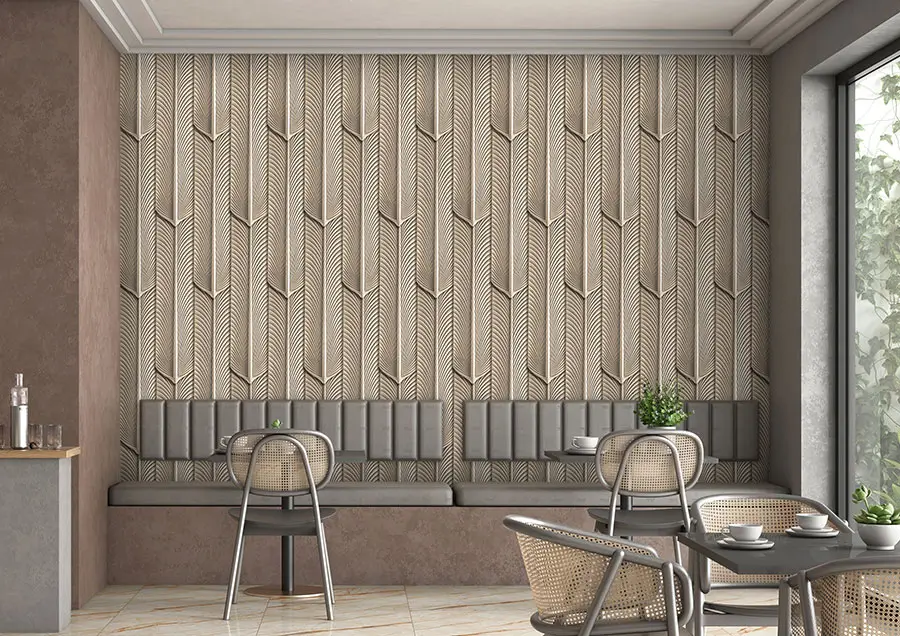

Wall finish selection is not only about how the room should be aesthetically finished. Time required for installation, maintenance, design variety, and cost considerations also come into play. The conventional finishes, namely paint, wallpaper, and plaster, still dominate; however, decorative wall panels provide an option for creating unique interior textures.
PU Wall Panels provide a way to introduce stone, brick, and other textured appearances without using the corresponding heavy natural materials. Although they add more material to a wall than paint or wallpaper, they are generally lightweight compared with many natural stone and masonry decorative finishes. The knowledge about the difference between those will help to choose the proper wall finish.
How do PU Wall Panels compare with traditional wall finishes?
PU Wall Panels offer three-dimensional decorative textures, including stone and brick-inspired designs, while paint and wallpaper primarily provide colour or printed patterns. Plaster can create smooth or textured finishes depending on the application. Installation time, maintenance, repairability and cost vary across these materials, so the best choice depends on the wall condition, intended design and project requirements.
PU Wall Panels vs Paint vs Wallpaper vs Plaster
| Factor | PU Wall Panels | Paint | Wallpaper | Decorative Plaster |
| Visual effect | 3D textures | Colour and surface finish | Printed patterns and textures | Smooth or textured effects |
| Material weight | Lightweight compared with many stone finishes | Minimal added weight | Minimal added weight | Varies by system |
| Installation | Panel and substrate dependent | Surface preparation and coating | Surface preparation and alignment | Skilled application may be required |
| Maintenance | Cleaning based on product guidance | Cleaning and touch-ups | Depends on wallpaper type | Depends on finish and treatment |
| Repair | Panel repair or replacement | Local repainting | Patching or replacement | Local repair may require finish matching |
| Design flexibility | Stone, brick, rock and 3D designs | Wide colour selection | Wide pattern selection | Custom textures and finishes |
| Best use | Decorative feature walls | General wall finishing | Pattern-led interiors | Textured or seamless decorative surfaces |
What Should You Compare Before Choosing a Wall Finish?
Wall finishes can be beautiful when initially applied but depend largely on their suitability for use. There are those that are very easy to maintain but lack in terms of texture, while there are those that have more texture but need to be carefully applied or maintained.
This will depend on what the owner wants from the wall finish, the state of the wall and the environmental condition as well as the ease of maintenance. Below is the comparison between PU wall panels and other wall finishes based on three major factors.
1. Are PU Wall Panels Easier to Install Than Traditional Wall Finishes?
Traditional methods of wall finishes could be a multi-step process. This includes painting that would need cleaning, filling gaps, sanding, and applying multiple layers. Wallpaper would require preparing an appropriate base and aligning them properly. Plaster finishes could need professional application and time for drying.
In the case of PU wall panels, it could be a more straightforward way to have textured walls, depending on the type of material and how it is installed. The comparatively lightweight construction of PU Wall Panels can make handling and positioning more manageable than some heavier decorative materials. However, installation time depends on the existing wall condition, panel dimensions, cutting requirements, adhesive or fixing method, corners and finishing details.
For a better understanding of surface preparation, fixing and finishing, refer to Artisun's PU Wall Panel Installation Guide before planning the installation.
2. Which Wall Finish Requires Less Maintenance?
The maintenance process is different from one finish to another in the conventional finishes. The painted walls might require touch-up where there are markings or chips while the wallpapers are likely to peel and suffer damages based on the material they are made up of.
PU wall panels will require cleaning from time to time, depending on the recommendations from the manufacturer. Any damaged areas will have to be repaired or replaced, depending on the nature of installation. Buyers should consider the process of cleaning and repairability before choosing any product.
3. How Do PU Wall Panels Compare in Texture and Visual Depth?
The paint comes in a variety of colors, while the wallpaper brings different prints and patterns to the wall. The two finishes are ideal when there is a need to use either color or a specific pattern in a design.
The PU wall panel brings the physical touch to the wall. It can be created to look like stone prints, brick designs, and elevated wall panels. This makes the panels important in cases where there is a need to introduce an enhanced visual aspect.
4. Which Wall Finish Offers More Design Flexibility?
There are varying degrees of flexibility with traditional finishes. Repainting walls in another color is usually easy, but stripping wallpaper and working on plaster walls may require further preparations.
Panels also allow for flexibility because of the variety of shapes, textures, and patterns that they have. They can be placed on specific walls to highlight them or contrast with other types of finishes within a room. Their flexibility will depend on how they are attached to the wall, as well as the condition of the wall itself.
Where Can PU Wall Panels Be Used in Indian Interiors?
In India, PU Wall Panels can be considered for residential and commercial interiors where textured feature walls are part of the design. Their suitability depends on the selected product, wall condition and application requirements.
| Interior space | Potential application |
| Living rooms | TV backdrops and feature walls |
| Bedrooms | Decorative bed-back walls |
| Hotels | Reception and lounge feature walls |
| Restaurants | Dining backdrops and statement walls |
| Cafés | Stone- and brick-inspired interiors |
| Offices | Reception and meeting spaces |
| Retail stores | Product-display backgrounds |
| Showrooms | Decorative walls and display areas |
When Should You Choose PU Wall Panels Over Traditional Finishes?
There is no ultimate winner for all projects. Traditional finishes will still work well on projects where the walls are not complex, have a smooth surface, or can be easily repainted. On projects where there is an emphasis on texture, feature walls, or decoration, PU wall panels might do better than others.
It all comes down to appearance, installation, maintenance, and budget. Conducting research on products before making your decision may save you some trouble later on.
The Best Finish Is the One That Works Beyond Day One
The comparison between PU wall panels and conventional wall finishes involves a trade-off between appearance and practical use. Paint, wallpaper, and plaster have each been used effectively, but there is also an alternative to adding depth and unique textures to walls through panels.
In order to meet the needs of homeowners, architects, and contractors looking for flexible decoration materials for walls, Artisun Industries manufactures PU wall panels for interior design projects. By evaluating all the parameters, such as installation, maintenance, and flexibility of design, buyers can make the right choice.
Most Popular Questions
Are PU Wall Panels better than paint or wallpaper?
Not always. PU Wall Panels suit projects requiring three-dimensional textures, while paint and wallpaper can be better for simpler colour or pattern-based finishes.
Are PU Wall Panels easy to install?
Not always. PU Wall Panels suit projects requiring three-dimensional textures, while paint and wallpaper can be better for simpler colour or pattern-based finishes.
Do PU Wall Panels require maintenance?
Yes. Cleaning and maintenance depend on the panel's finish, installation and manufacturer recommendations.
Where can PU Wall Panels be used in India?
They can be considered for living rooms, bedrooms, offices, hotels, restaurants, cafés, retail stores and showrooms.
Are PU Wall Panels suitable for commercial interiors?
They can be suitable for selected commercial applications when the product meets the project's installation, fire-safety and other technical requirements.

Leading PU Wall Panel Manufacturer
As a proud representative of Artisun Industries, a leading PU Wall Panel manufacturer, I bring our expertise in crafting high-quality, durable PU Wall Panel tailored to meet diverse architectural needs. Join us in exploring innovative solutions that transform spaces beautifully!