
When it comes to choosing the right wall finish, most people automatically go for tiles. It’s familiar, widely used, and considered a safe option. But with modern interior design evolving rapidly, many homeowners and designers are now comparing PU wall panels vs wall tiles to find a more efficient and visually appealing solution.
The truth is, this decision is no longer just about looks. It affects installation time, maintenance, cost, and overall design flexibility. While tiles have been the traditional choice for years, PU wall panels are emerging as a modern alternative for faster execution and better design impact.
So, which one is actually better for your space?
In this guide, we’ll break down the real differences between PU wall panels and wall tiles, helping you choose the right option based on performance, practicality, and long-term value.
Still Choosing Tiles by Default? It Might Be Time to Rethink That
Most people are used to using tiles for flooring for years, so they continue to use them because they know how to install them. Most contractors have a long history of installing tiles; therefore, they feel comfortable installing them.
However, the trend in new interiors is toward faster installation, neater installs, and more creative designs.
PU Panels vs Wall Tiles: What Changes on Site, in Cost, and Over Time
Before making a choice, it helps to look at how both materials perform in real-world use.
1. PU Wall Panels vs Tiles: Installation Comparison
Wall tiles require multiple steps, surface preparation, adhesive application, careful placement, grouting, and cleaning. The process takes time and depends heavily on skilled labour.
A PU wall panel, on the other hand, is much simpler to install. This item is lightweight and built for an easier installation. Consequently, projects can be completed in a shorter amount of time; therefore, especially helpful in completing deadlines on time.
2. Weight: Heavy Surfaces vs Lightweight Panels
Tiles are heavy and can add structural load, particularly when used across large wall areas. Transporting and handling them also requires more effort.
PU panels are lightweight, making them easier to move, cut, and install. This makes them suitable for both new construction and renovation projects where heavy materials may not be ideal.
3. Design: Flat Finishes vs Built-In Texture
Tiles usually come in flat finishes with limited texture. While there are many patterns and prints available, achieving depth often requires combining multiple elements.
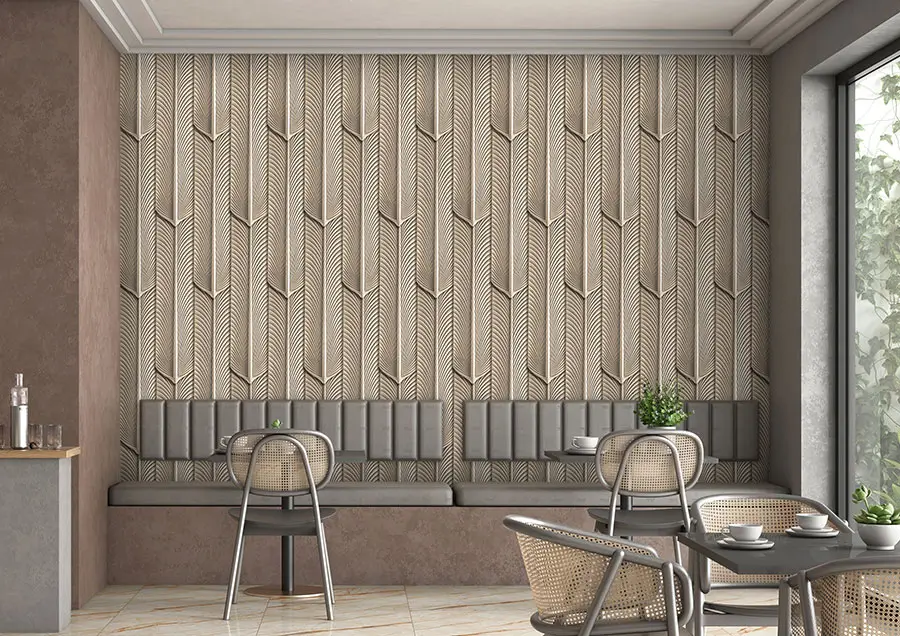
A PU wall panel naturally offers textured designs such as stone, brick, wood, and modern patterns. This allows you to create feature walls without adding extra layers or materials.
4. Maintenance: Grout Lines vs Clean Surfaces
Traditionally, tiles are a very easy surface to clean, but they can require maintenance or replacement for grout lines when they develop a lot of dirt or grime build-up.
On the other hand, PU panels have been built to last and need very little maintenance. It is very simple to clean a PU Panel surface, as all you have to do is wipe down the surface, and there are no grout lines on the PU Panels; therefore, it makes them a great option for use in both residential and commercial settings.
5. Timelines: Delays vs Faster Turnarounds
Tile installation involves drying and curing time, which can delay project completion.
PU panels help speed up the process. Since they are ready-to-install, spaces can be completed faster and used sooner. This is particularly useful for retail stores, offices, and hospitality projects.
6. Cost: Layered Expenses vs Predictable Spending
Tiles can vary widely in price depending on quality, finish, and installation cost. Labour and time often add to the overall expense.
A PU wall panel helps keep costs more predictable. Faster installation reduces labour costs, and the overall process is more streamlined. Many designers working on large projects source panels from brands like Artisun Industries to maintain consistency while managing budgets efficiently.
7. Renovation: Demolition vs Easy Upgrades
Removing and replacing tiles can be time-consuming and messy. It often involves breaking existing surfaces and reworking the wall.
PU panels are easier to use in renovation projects. They can be installed with minimal disruption, making them ideal for quick upgrades without major structural changes.
PU Wall Panels vs Wall Tiles Comparison
| Feature | PU Wall Panels | Wall Tiles |
| Installation | Quick and easy installation | Time-consuming, multi-step process |
| Weight | Lightweight, easy to handle | Heavy, requires more effort |
| Design | Textured designs (wood, stone, modern patterns) | Mostly flat, limited texture |
| Maintenance | Low maintenance, no grout lines | Requires grout cleaning and maintenance |
| Cost | Predictable, lower labour cost | Varies based on material and labour |
| Durability | Durable for interior use | Highly durable, especially for wet areas |
| Renovation | Easy to install over existing surfaces | Requires demolition and rework |
| Best Use | Living rooms, offices, feature walls | Bathrooms, kitchens, high-moisture areas |
| Installation Time | Faster project completion | Longer due to curing and drying time |
So, Are Tiles Still the Safe Choice or Just the Familiar One?
For contemporary designs, PU panels provide a more functional option than tile products (assuming speed of installation and ease of use are key components). If you have an area that needs to be completed quickly, has many design options available, and requires minimal maintenance, then you will probably prefer to use a PU wall panel over tile.
Although tile continues to be the product of choice in certain functional spaces (i.e., bathrooms and kitchens), they tend to provide less versatility when being used as decorative surfaces or as feature elements than PU panels do.
Conclusion: The Smarter Choice for Today’s Interiors
With an attractive design that requires little upkeep, PU wall panels made by Artisun Industries meet all three of these characteristics. By having a unique combination of texture, performance, and versatility, PU wall panels allow wall finishes to become both modern and traditional in style.
To meet the needs of both residences and businesses and to re-engineer their way of building the spaces within these facilities, both types of wall finishes can be found in Artisun's PU wall panels.
In order to determine what material is best suited for your project, consider not only the preference but also which material will perform at its optimum level throughout the entire project.
Mail us today at [email protected] to discuss your project requirement.

Leading PU Wall Panel Manufacturer
As a proud representative of Artisun Industries, a leading PU Wall Panel manufacturer, I bring our expertise in crafting high-quality, durable PU Wall Panel tailored to meet diverse architectural needs. Join us in exploring innovative solutions that transform spaces beautifully!